
How to Build an Emergency Fund — and Why You Need.

Most people think financial disasters only happen to others. Until the car breaks down on a Monday morning. Until the hospital bill arrives. Until the layoff email lands in your inbox at 9 AM.
That moment — when life hits you without warning — is exactly when you find out whether your finances can protect you or destroy you.
An emergency fund is the one financial tool that stands between you and complete financial chaos. And the best part? You do not need to be rich to build one. You just need a clear plan — which is exactly what this guide gives you.
By the end of this post, you will know exactly how much to save, where to keep it, and the fastest ways to build your emergency fund from zero — even if money is tight right now.
Table of Contents
- What Is an Emergency Fund?
- Why You Absolutely Need One (Even If You Think You Don’t)
- How Much Should You Save in Your Emergency Fund?
- Where Should You Keep Your Emergency Fund?
- How to Build an Emergency Fund Step by Step
- How to Build an Emergency Fund Fast — Even on a Tight Budget
- Common Emergency Fund Mistakes to Avoid
- Emergency Fund FAQ
- Final Thoughts
What Is an Emergency Fund?
An emergency fund is money you set aside specifically for unexpected expenses or financial emergencies. It is not your vacation fund. It is not your down payment savings. It is not your investment account.
It is dedicated, untouched cash that sits quietly in the background — until life decides to surprise you.
Think of it as financial self-insurance. Instead of grabbing your credit card when the roof leaks or the dentist calls, you tap your emergency fund. You fix the problem, move on, and slowly refill the fund. No debt. No stress spiral. No sleepless nights.
What counts as an emergency?
- Sudden job loss or income cut
- Unexpected medical or dental bills
- Car repairs or breakdowns
- Home repairs (broken heater, burst pipe, roof damage)
- Emergency travel (family illness, funeral)
- Appliance replacement
What does NOT count as an emergency?
- A sale on shoes you’ve been eyeing
- A vacation you didn’t plan for
- Holiday gifts
- A new phone when your old one still works
The line is simple: unplanned, urgent, necessary. If it’s all three — it’s an emergency.

Why You Absolutely Need One (Even If You Think You Don’t)
Here is a hard truth most people ignore until it is too late.
More than half of Americans cannot cover a $1,000 unexpected expense from savings alone. That means one car repair, one ER visit, or one missed paycheck away from financial trouble for millions of households.
And this is not just an American problem. Across the globe, the majority of households are living with little to no financial buffer at all.
If you have a stable job, you might think you are fine. But consider this:
- Job loss is real. Even in a strong economy, companies restructure, industries shift, and people get laid off. The average job search takes three to six months. What would you do for three months with no income?
- Health emergencies do not give warnings. A single unexpected hospital visit can cost thousands — even with insurance.
- Things break. Appliances, cars, roofs — they all fail eventually. Usually at the worst possible time.
Without an emergency fund, one unexpected event can force you into credit card debt, personal loans, or borrowing from family. And debt from yesterday’s emergency makes tomorrow’s finances even harder.
An emergency fund breaks that cycle before it starts.
How Much Should You Save in Your Emergency Fund?
This is the question everyone asks — and the answer depends on your personal situation.
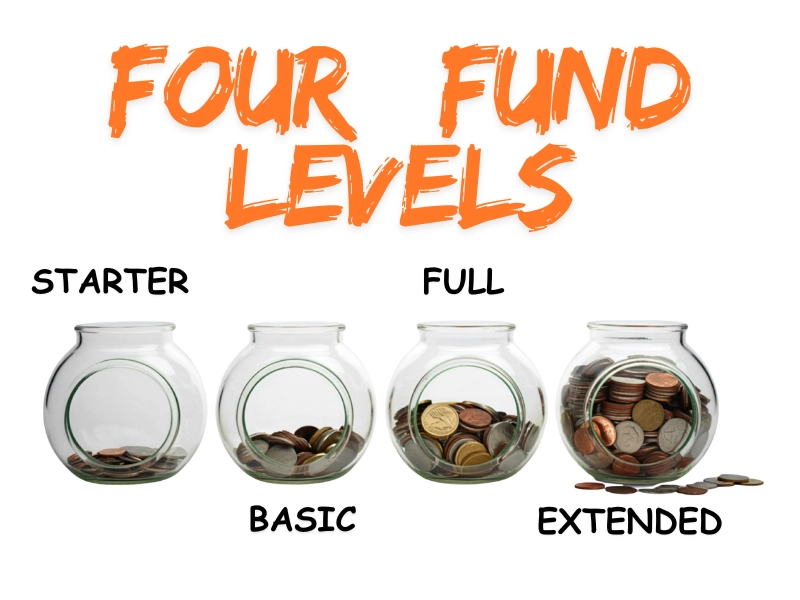
Here is the general framework most financial experts use:
| Fund Level | Amount | Who It’s For |
|---|---|---|
| Starter Fund | $500 – $1,000 | Complete beginners, start here |
| Basic Fund | 1–3 months of expenses | Single person, stable income |
| Full Fund | 3–6 months of expenses | Most working adults |
| Extended Fund | 6–12 months of expenses | Freelancers, self-employed, variable income |
The gold standard for most people is 3 to 6 months of essential living expenses.
To calculate your target number, add up your monthly essential costs:
- Rent or mortgage
- Groceries
- Utilities (electricity, water, internet)
- Transportation (car payment, gas, public transit)
- Insurance premiums
- Minimum debt payments
Then multiply that total by 3 (minimum) or 6 (recommended).
Example: If your essential monthly expenses total $2,500, your emergency fund target is $7,500 to $15,000.
Does that number feel impossible? Good — that means you are being honest with yourself. The solution is not to panic. The solution is to start small and build consistently. Even $500 in savings can stop a minor emergency from becoming a financial disaster.
Where Should You Keep Your Emergency Fund?
Where you store your emergency fund is just as important as how much you save. It needs to meet two requirements: easily accessible and completely safe.
This rules out:
- The stock market (too volatile — your $10,000 could become $7,000 the week you need it)
- Physical cash at home (can be lost, stolen, or spent on pizza)
- Your regular checking account (too easy to accidentally spend)
The best option: A High-Yield Savings Account (HYSA)
A high-yield savings account gives you the best of everything — your money earns interest (currently 4–5% APY in 2026), it is FDIC insured up to $250,000, and you can transfer it to your checking account within 1–2 business days.
What to look for in an HYSA:
- No monthly maintenance fees
- No minimum balance requirements
- Full FDIC insurance
- APY above 4%
- Easy online transfers
Pro Tip: Keep your emergency fund in a separate bank from your everyday checking account. This small friction — having to log into a different bank — is enough to stop most impulse spending. Out of sight, out of mind.
How to Build an Emergency Fund Step by Step
Step 1: Set Your Starter Goal First
Do not start by thinking about $15,000. That number is paralyzing.
Start with $1,000. That is your first milestone. It is small enough to feel achievable and big enough to actually save you from most minor emergencies.
Once you hit $1,000, move to one month of expenses. Then two. Then three. Each milestone you cross builds confidence and momentum.
Step 2: Look at Where Your Money Is Actually Going
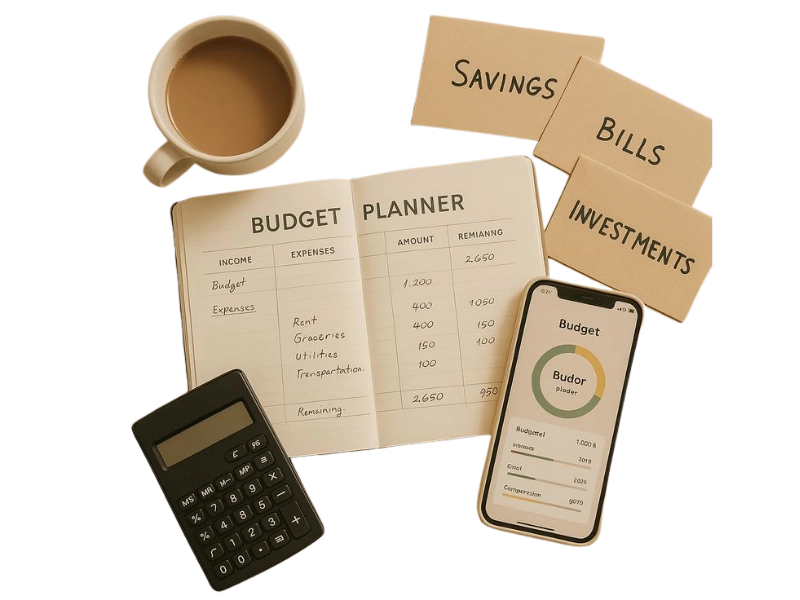
You cannot save what you cannot see. Pull up your last 2–3 months of bank and credit card statements and look honestly at where your money went.
Most people are shocked. Streaming subscriptions you forgot about. Food delivery every other night. Impulse purchases that felt small but added up to hundreds.
You do not have to cut everything. But you do have to see everything. Once you know where the leaks are, you can decide which ones to plug.
Step 3: Find Your Monthly Savings Amount
After reviewing your spending, find a number you can consistently set aside every month. It does not have to be large. $50 a month adds up to $600 in a year. $200 a month gets you to your first $1,000 in just five months.
The rule here is simple: consistency beats size. Saving $100 every single month is far more powerful than saving $500 once and then nothing for six months.
Step 4: Automate Everything
This is the single most powerful step in this entire guide.
Set up an automatic transfer from your checking account to your emergency fund savings account the same day you get paid. Treat it exactly like a bill — non-negotiable, recurring, automatic.
When the money moves before you can see it or spend it, saving becomes effortless. You adjust to the slightly smaller balance in your checking account within a week. Most people barely notice it is gone.
If your employer allows direct deposit splitting, even better — send a percentage straight to your emergency fund before it ever hits your checking account.
Step 5: Use Windfalls to Accelerate
Tax refunds, work bonuses, birthday money, freelance income, sold items — any unexpected money that comes in should have a plan before it arrives.
The rule: send at least 50% of every windfall directly into your emergency fund. The other 50% can go toward whatever you want guilt-free.
Because windfall money never felt like “yours” to begin with, you will not miss it the same way you would miss money from your regular paycheck.
Step 6: Review and Adjust Every 3 Months
Your life changes. Your expenses change. Your income changes.
Every three months, review your emergency fund target and your monthly contribution. If you got a raise, increase your automatic transfer. If your rent went up, recalculate your target. Treat it as a living plan, not a set-and-forget strategy.
How to Build an Emergency Fund Fast — Even on a Tight Budget
If your budget is already stretched thin, here are practical strategies to find money you did not know you had:
Cut one expense completely this month. Not forever. Just for 30 days. Pick your most obvious unnecessary expense — the streaming service you barely use, the gym membership you never visit — and redirect that money immediately.
Sell what you are not using. Most homes have $200–$500 worth of stuff sitting in closets, garages, and drawers. Electronics, clothes, furniture, sports equipment — sell it on eBay, Facebook Marketplace, or Craigslist. Every dollar goes straight to the fund.
Pick up one extra income stream. Even five to ten hours a week of freelancing, delivery driving, tutoring, or any side gig at $15–$25 per hour generates $300–$1,000 extra per month. If 100% of that income goes to your emergency fund, you can build a solid starter fund in just a few months.
Use a round-up app. Several banking apps and savings tools will automatically round up your purchases to the nearest dollar and deposit the difference into savings. Small amounts that feel invisible add up to hundreds over the course of a year.
Start with $5. If $50 per month feels impossible, start with $5 per week. That is $260 in a year — enough to handle a minor car repair or unexpected bill without reaching for a credit card. The amount matters less than the habit.

Common Emergency Fund Mistakes to Avoid
Mistake 1: Waiting until you can save a “real” amount There is no minimum. Start with whatever you have. $10 saved today is infinitely better than $0 saved while you wait for perfect conditions.
Mistake 2: Keeping it in your regular checking account You will spend it. It is not a question of discipline — it is human nature. Keep it in a separate account that takes at least one extra step to access.
Mistake 3: Investing your emergency fund The stock market can drop 30% in a month. Your emergency fund is not an investment — it is insurance. Keep it liquid and safe in a high-yield savings account.
Mistake 4: Using it for non-emergencies A sale is not an emergency. A vacation is not an emergency. Be honest with yourself about what qualifies. Protect the fund from yourself.
Mistake 5: Never replenishing it after use If you dip into the fund, replenishing it becomes your new top financial priority. Set up a plan the same week you use it.
Emergency Fund FAQ
How long does it take to build a 3-month emergency fund? It depends on your income and how much you can save monthly. If you save $300 per month and your monthly expenses are $2,500, building a $7,500 fund takes about 25 months. Speed it up with windfalls and extra income.
Should I build an emergency fund or pay off debt first? Both matter, but the recommended order is: build a starter fund of $1,000 first, then aggressively pay off high-interest debt, then complete your full emergency fund. The starter fund prevents you from taking on new debt when something unexpected happens while you are paying off the old debt.
Can I use a credit card as my emergency fund? No. A credit card is debt, not savings. If you charge an emergency and cannot pay it off immediately, you are now paying interest on top of the original problem. An emergency fund gives you options — a credit card creates obligations.
What if I have irregular income as a freelancer? Aim for a larger fund — 6 to 12 months of expenses. In months when you earn more than expected, send the extra straight to your fund. In slow months, your fund covers the gap. The goal is stability in an unpredictable income stream.
Where is the best place to keep an emergency fund in 2026? A high-yield savings account (HYSA) earning 4–5% APY. Look for no fees, FDIC insurance, and easy transfers. Keep it at a different bank than your everyday checking account.

Final Thoughts
Here is the honest truth about emergency funds — most people know they need one, but very few actually build one. Not because it is hard, but because it feels far away and non-urgent.
Until it is not.
The car breaks down. The medical bill arrives. The job disappears. And suddenly the emergency fund you kept meaning to start becomes the most important thing you never did.
Do not let that be your story.
Start today. Start small. Start with whatever you have — even if it is just $20. Open a separate savings account, set up an automatic transfer, and let time do the rest.
Your future self will thank you for every single dollar you put away today.
What is stopping you from starting your emergency fund today? Drop your answer in the comments below — let’s figure it out together.
[…] Building a $1,000 starter emergency fund […]